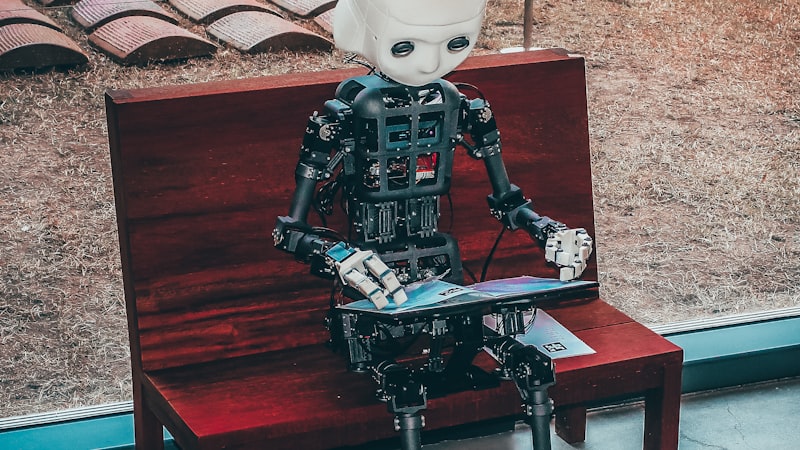
As we enter late October 2026, the artificial intelligence and broader technology landscape has transitioned from generative experimentation to deep structural integration. The hype around primitive multi-modal chat interfaces has given way to deterministic agentic systems, localized sovereign models, and novel silicon architectures that challenge traditional computing paradigms.
At TechNova AI, our research team has analyzed market shifts, deployment telemetry, and research breakthroughs to compile the top 10 trends defining technology today, October 27, 2026.
1. Autonomous Multi-Agent Orchestration Frameworks
Single-prompt LLM interactions are now legacy. In late 2026, enterprise software is defined by Autonomous Agent Orchestration. Complex workflows in logistics, finance, and software engineering are handed off to hierarchical clusters of specialized agents that execute, self-correct, and verify tasks asynchronously without constant human intervention.
2. On-Device Sovereign Foundation Models
Data privacy regulations and bandwidth costs have driven a massive migration toward localized SLMs (Small Language Models). Modern smartphones and laptops now ship with integrated 20-billion parameter models running locally at zero latency, giving users absolute sovereignty over their personal context and sensitive enterprise data.
3. Neuromorphic Edge Silicon
Traditional GPU clusters are no longer the sole engines of AI inference. Neuromorphic processors—chips designed to mimic biological neural spikes—have hit mainstream deployment in IoT and robotics. These processors offer a 100x improvement in energy efficiency for real-time sensor processing and spatial navigation.
4. Self-Healing Codebases and Autonomous CI/CD
DevOps has evolved into NoOps. Modern development pipelines now feature self-healing code bases where automated testing suites detect bugs, spin up specialized coding agents to produce targeted pull requests, test against synthetic production environments, and deploy patches completely unassisted.
"The benchmark of software engineering in 2026 is no longer lines of code written per day, but the clarity of architectural boundaries provided to autonomous coding swarms."
5. Quantum-Classical Hybrid Algorithms in Production
While fault-tolerant quantum computing remains on the horizon, hybrid quantum-classical algorithms have officially crossed the commercial threshold in 2026. Financial risk modeling, molecular dynamics, and supply chain routing daily utilize cloud-accessible 1,000+ qubit processing units paired with classical hardware.
6. Biometric-AI Deepfake and Synthetic Defense Systems
With generative video and audio reaching indistinguishable realism, cybersecurity has pivoted toward continuous zero-trust biometric verification. Cryptographic watermarking at the sensor level and dynamic neural liveness detection have become mandatory for enterprise access and banking.
7. Photorealistic Spatial Neural Rendering
Spatial computing headsets and ambient displays have eliminated visual screen screen-door effects through real-time neural radiance fields (NeRFs) and Gaussian splatting. Environments are rendered on the fly, enabling true remote co-presence and immersive industrial digital twins.
8. Automated Regulatory and Governance Engines
With the global enforcement of stringent AI acts and safety frameworks, enterprises now rely on real-time compliance agents. These systems continuously monitor data pipelines, model weights, and inference outputs to enforce transparency and auditability automatically.
9. Ambient Energy-Harvesting IoT Networks
Batteryless micro-sensors powered by ambient RF signals, thermal gradients, and indoor light have saturated smart cities and factories. These low-power nodes continuously feed environmental telemetries directly into local inference engines.
10. Generative Molecular and Synthetic Biology Design
AI has fundamentally rewritten pharmacology and materials science. Generative models now design custom enzymes, bio-degradable polymers, and targeted therapies from scratch, dramatically reducing drug discovery timelines from years to weeks.
Conclusion: Preparing for the Autonomous Era
The common thread uniting 2026's tech trends is the transition from static human-driven utilities to dynamic, self-optimizing autonomous systems. Organizations that invest in robust data governance, localized silicon infrastructure, and multi-agent management will lead the next decade of digital transformation.