The Paradigm Shift: From Hardware to Intelligence
As we look closely at Tesla's trajectory heading into 2026, the narrative has fundamentally shifted. No longer viewed strictly as an automotive company, Tesla has firmly established itself as a vertically integrated artificial intelligence and robotics enterprise. The core value proposition of the brand now rests on its massive real-world data collection pipeline, custom silicon, and end-to-end neural network architectures.
Scaling Full Self-Driving (FSD) with End-to-End Neural Networks
The transition from traditional rule-based coding to end-to-end (E2E) deep learning models represents the single biggest technological leap for Tesla's Full Self-Driving software. By feeding millions of hours of driving video into massive compute clusters powered by custom AI hardware, Tesla’s models now take raw video input and output direct steering, acceleration, and braking commands.
- Video-in, Control-out: Eliminating hard-coded human heuristics in favor of learned driving behaviors.
- FSD v12 and Beyond: Delivering human-like hesitation, navigation choices, and situational awareness.
- Dojo Supercomputer Integration: Custom silicon designed explicitly to accelerate neural network training loops.
The Robotaxi Economy and Cybercab Deployment
The year 2026 marks a critical commercial inflection point with the rollout of dedicated autonomous vehicles, widely anticipated as the Cybercab fleet. Unlike retrofitted consumer vehicles, these purpose-built robotaxis are designed without steering wheels or pedals, targeting a disruption in urban mobility and public transportation economics.
"Tesla is no longer just selling cars; it is deploying a software-defined autonomous network that scales exponentially with every vehicle added to the global fleet."
Optimus: The Humanoid Robot Revolution
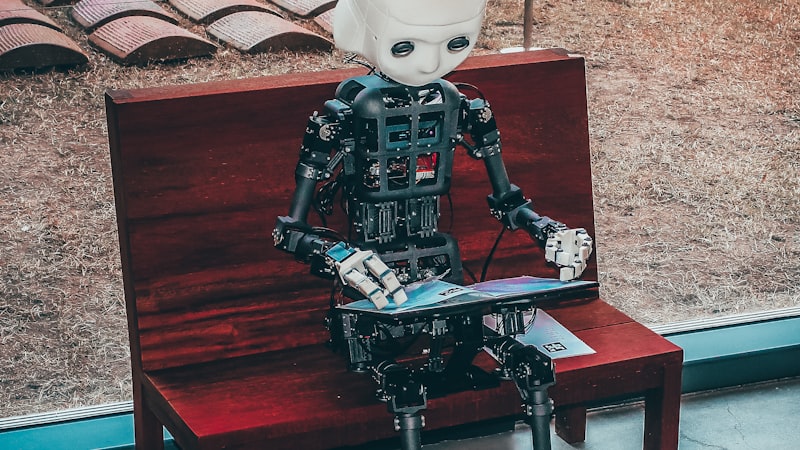
Beyond automotive transport, Tesla's 2026 roadmap heavily features the Optimus humanoid robot project. Leveraging the same spatial awareness models, occupancy networks, and custom actuator designs developed for autonomous driving, Optimus is transitioning from controlled factory testing to commercial utility. The ability to transfer edge-case handling from autonomous cars to bipedal robots gives Tesla an unprecedented advantage in general-purpose industrial automation.
Conclusion: The Road Ahead
Tesla in 2026 is a masterclass in aggressive vertical integration of AI. By combining massive fleet telemetry, cutting-edge neural network architectures, and advanced robotics, the company is setting a new benchmark for what modern technology conglomerates can achieve. While regulatory approvals and compute infrastructure costs remain critical challenges, the trajectory points decisively toward a heavily automated, AI-driven future.